Eravikulam National Park: Tickets, Timings and the Nilgiri Tahr
In Eravikulam National Park, you walk a paved road while wild goats called Nilgiri tahr graze a few steps away. On a clear morning you see Anamudi, south India's highest peak. The entrance is 9.6 km from Munnar, and a park bus takes you up. An Indian adult's ticket costs ₹200, booked online. The view is clearest before noon.
In this guide
Eravikulam National Park at a glance
Where: Rajamala (also written Rajamalai), the open part of the park, in Idukki district, Kerala
Entrance: Fifth Mile (Ancham Mile in Malayalam), on the Munnar to Udumalpet road, 9.6 km from Munnar town
Ticket: ₹200 for an Indian adult, ₹500 for a foreign visitor, bus included, booked online
Slots: 8 am to noon, noon to 2 pm, 2 pm to 4.30 pm
Closed: usually 1 February to 31 March, while the young tahr are born
The walk: a paved road of 1 to 1.5 km at Rajamala, out and back
Time needed: 3 to 4 hours from the entrance and back on a weekday; longer on Sundays and holidays
Best slot: 8 am to noon
If you stay in Munnar town or on the hills around it, find your area in the table to see when to leave for the first slot.
| From | Distance by road | Drive (no traffic) | Leave by, for 8 am at Fifth Mile |
|---|---|---|---|
| Munnar town (KSRTC bus stand) | 9.6 km | 25 min | 7:15 am |
| Pothamedu | 15 km | 35 min | 7:00 am |
| Chithirapuram | 22 km | 50 min | 6:45 am |
| Chinnakanal (Gap Road side) | 29 km | 1 h 15 min | 6:30 am |
| Mattupetty Dam | 19 km | 45 min | 7:00 am |
| Marayoor | 32 km | 1 h 15 min | 6:30 am |
| Kochi airport | 115 km | 3 h 30 min | Stay in Munnar the night before |
These are Google Maps times with no traffic, rounded up. Your drive can take longer with a late start, slow traffic, road work, rain or a stop on the way. On Sundays and holidays, the road near the entrance jams. So leave earlier than the table says, and allow 5 hours or more for the visit.
Want the rest of the day planned too? Build your Munnar plan on Travelsa, with Eravikulam first thing in the morning.
Eravikulam closing month: the Nilgiri tahr calving season
Eravikulam closes every year, usually from 1 February to 31 March, so that the female tahr can give birth away from visitors. It opens again on 1 April. The Forest Department confirms each year's dates in January and gives a week's notice before it closes.
Tahr mate in the monsoon, in July and August, and most young are born from January to mid-February. So the young you'll see in April are only a few weeks old, and they stay close to their mothers near the road.
In May you can still see the young tahr. The view is clear at 9 am on 6 out of 10 days, so take the 8 am slot. May is also the busiest month at the park. Book early and go on a weekday, when the queues move faster.
The park stays open through the monsoon, from June to September. In those months it rains on most mornings. On red-alert days (the weather office's highest rain warning), the district can stop tourist trips at short notice. A call to the park office during office hours, the day before, tells you if it's open.
Call: Wildlife Warden's office, Munnar: 04865 231587
Morning or afternoon at Rajamala: the view by month
My pick is the 8 am slot. In November, December, January and April, most mornings at Rajamala are clear, and the cloud comes down by early afternoon. In December, the view is clear at 9 am on 8 out of 10 days. At 2 pm, it's clear on 3 out of 10.
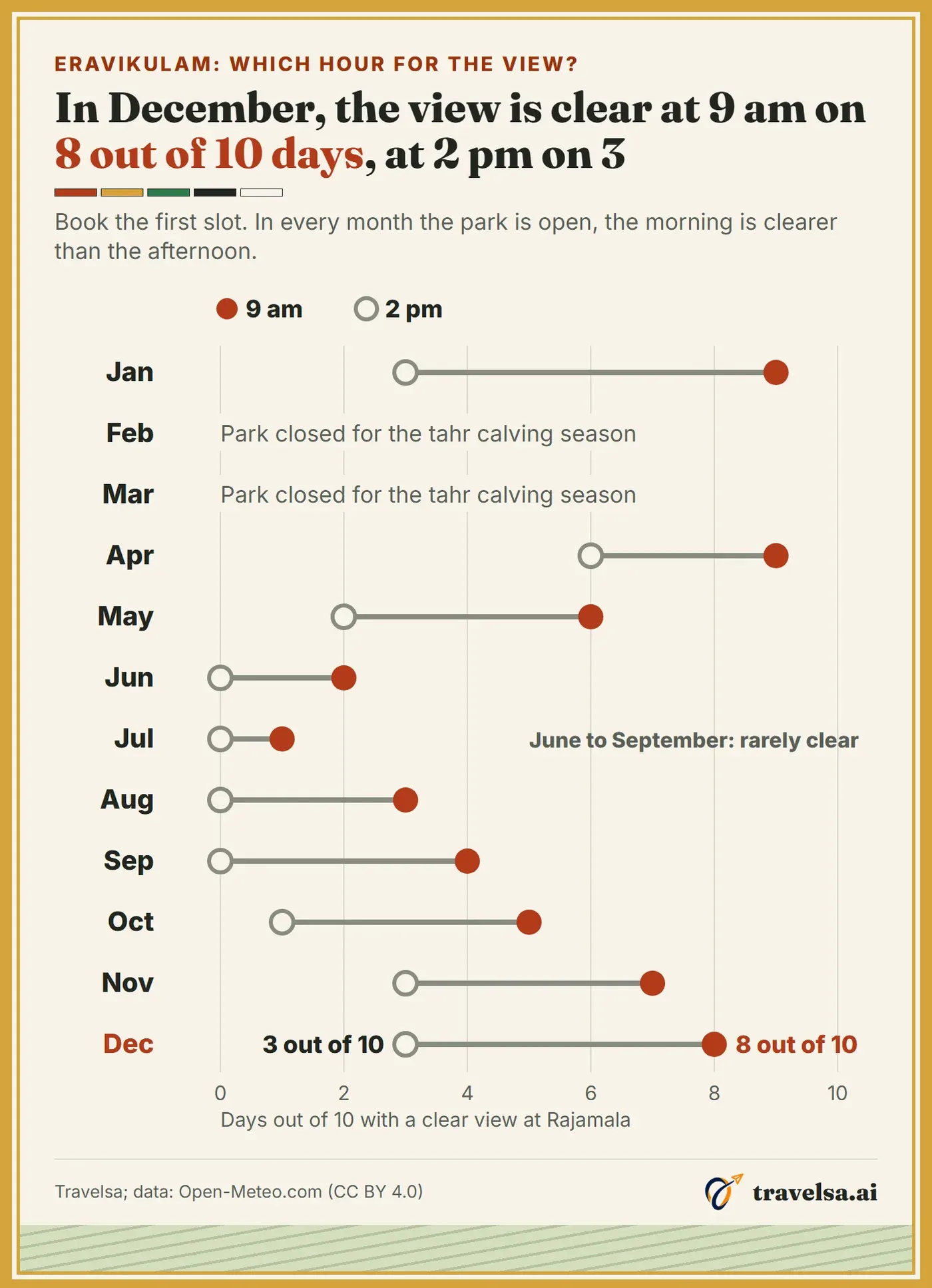
Clear mornings and afternoons at Rajamala, month by month. Tap to enlarge.
| Month | Clear days out of 10 at 9 am | Clear days out of 10 at 2 pm |
|---|---|---|
| January | 9 | 3 |
| February and March | Park closed | Park closed |
| April | 9 | 6 |
| May | 6 | 2 |
| June | 2 | under 1 |
| July | 1 | under 1 |
| August | 3 | under 1 |
| September | 4 | under 1 |
| October | 5 | 1 |
| November | 7 | 3 |
| December | 8 | 3 |
Rain follows the same pattern. From May to November it rains on most afternoons, and from June to September on most mornings too.
An early-slot visit
Take the 8 am slot, and you'll walk in clear air on most mornings from November to January and in April. Tahr start feeding at sunrise and rest more as the day warms, so the early herds are up and grazing, not lying down. You'll also find shorter queues, because the crowds from Munnar arrive later in the morning.
Frost is common on the grass on December and January nights. When the first buses run, it's around 15°C. The wind at the top makes it feel colder. I'd carry a light jacket and a raincoat, even when Fifth Mile is sunny.
An afternoon visit
If you book the noon or the 2 pm slot, cloud may hide the view. Most December afternoons have cloud by 2 pm, and the queue for the bus back down grows late in the day. I'd take an afternoon slot only in April, when the view stays clear on 6 out of 10 afternoons.
From June to September, a clear view is rare at any hour. You'll still see the tahr. Anamudi is usually in cloud. A raincoat and closed shoes help, because travellers report leeches on the wet grass.
Eravikulam National Park tickets, entry fee and online booking
Eravikulam tickets are sold online, on the park's own booking site, eravikulamnationalpark.in. It's run by the Anamudi Forest Development Agency, which handles the park's ticketing for the Kerala Forest Department's Munnar Wildlife Division, and the division's website links to it. A phone version, m.eravikulamnationalpark.in, works the same way. In May and on long weekends, about twice as many people arrive as the park has places, so book before you reach Fifth Mile.
You can book up to 45 days ahead on the website, and up to 10 days ahead on WhatsApp. The Forest Department also gives the booking QR code to taxi drivers, resorts and homestays in Munnar, so your stay may have it at the desk. Some old travel pages still list eravikulam.org as the park's website. That address no longer belongs to the park and shows old fees, so book only on eravikulamnationalpark.in.
| Ticket | Price |
|---|---|
| Indian adult | ₹200 |
| Park bus up and down | Included |
| Indian child (5 to 12) | around ₹150 |
| Child under 5 | Free |
| Foreign visitor | ₹500 |
| Ordinary (still) camera | ₹50 |
| Video camera | ₹350 |
| Booking at the Forest Information Centre, Munnar (9 am to 3 pm) | ₹50 extra |
| Buggy for visitors with a disability | Free |
We read the adult, foreign and camera fees on the booking site on 27 November 2026. The child fees and the free buggy come from 2024 to 2026 reports. Fees can change, so confirm the price and the child age band for your date on eravikulamnationalpark.in when you book.
The ticket price includes the bus up and down. For two Indian adults and one child, the entry comes to around ₹550. An ordinary camera or a video camera needs its own ticket. Booking at the Munnar counter adds ₹50 extra.
Booking takes 5 steps:
- On eravikulamnationalpark.in, you pick the Indian or the foreign visitor tab.
- Choose your date and slot. The view is clearest in the 8 am to noon slot.
- The form asks for one photo ID: Aadhaar (India's national ID card), driving licence, passport, voter ID, PAN (income-tax) card or a school ID. Carry the same ID to Fifth Mile.
- An ordinary camera or a video camera goes on the ticket too, if you carry one.
- Pay by card or UPI (India's phone payment system), and save the ticket.
The ticket is safest as a screenshot on your phone plus a printout. If a RuPay card (an Indian bank card) fails on the payment page, try another card. For a card from abroad, use the third payment option.
WhatsApp works too: send "hi" to +91 85476 03222, and it asks for your email, date, slot, tickets, camera and ID. In Munnar town, the Forest Information Centre at the Wildlife Warden's office on Nadayar Road also books tickets. It's open from 9 am to 3 pm and charges ₹50 extra. At the park, payment is by card or UPI, not cash, so carry cash only for your auto or taxi.
If you cancel more than 15 days ahead, you get half your money back. Between 15 days and 48 hours ahead, you get a quarter back, and after that nothing. Camera fees are never refunded.
Book: eravikulamnationalpark.in, or WhatsApp +91 85476 03222
Eravikulam National Park timings and the park bus
The park opens at 8 am. Your ticket shows your slot: 8 am to noon, noon to 2 pm, or 2 pm to 4.30 pm. Reach Fifth Mile before your slot starts.
Private cars stop at the Fifth Mile entrance, and the park bus takes you up from there. The walk and the view take 2 to 3 hours. With the queues, the whole visit from the entrance and back takes 3 to 4 hours.
At Fifth Mile you park, show your ticket and ID, have your bag checked and queue for the bus. The bus drops you at Rajamala, where the walk starts, and at the end you queue again at Rajamala for the bus down. On a weekday morning the queues move fast. Christmas to New Year, Onam, weekends in April and May, and the days after the 1 April reopening are the busiest: by mid-morning, the bus queue alone can take up to 2 hours.
"Every 1 minute you are late, you will stand in the queue for another 5 minutes." (A traveller at Eravikulam in May, in a Neelakurinji bloom year)
If traffic makes you late for your slot, call the park office and ask whether your ticket still works on a later bus. At Fifth Mile, find out what time the last bus comes down, and be back at the Rajamala bus stop before it.
Until 2006, visitors drove their own cars up to Rajamala. That year the Neelakurinji bloom, when these hills flower once every 12 years, brought huge crowds. So the park started the bus system you use today. Village committees run the buses, the stalls and the guides.
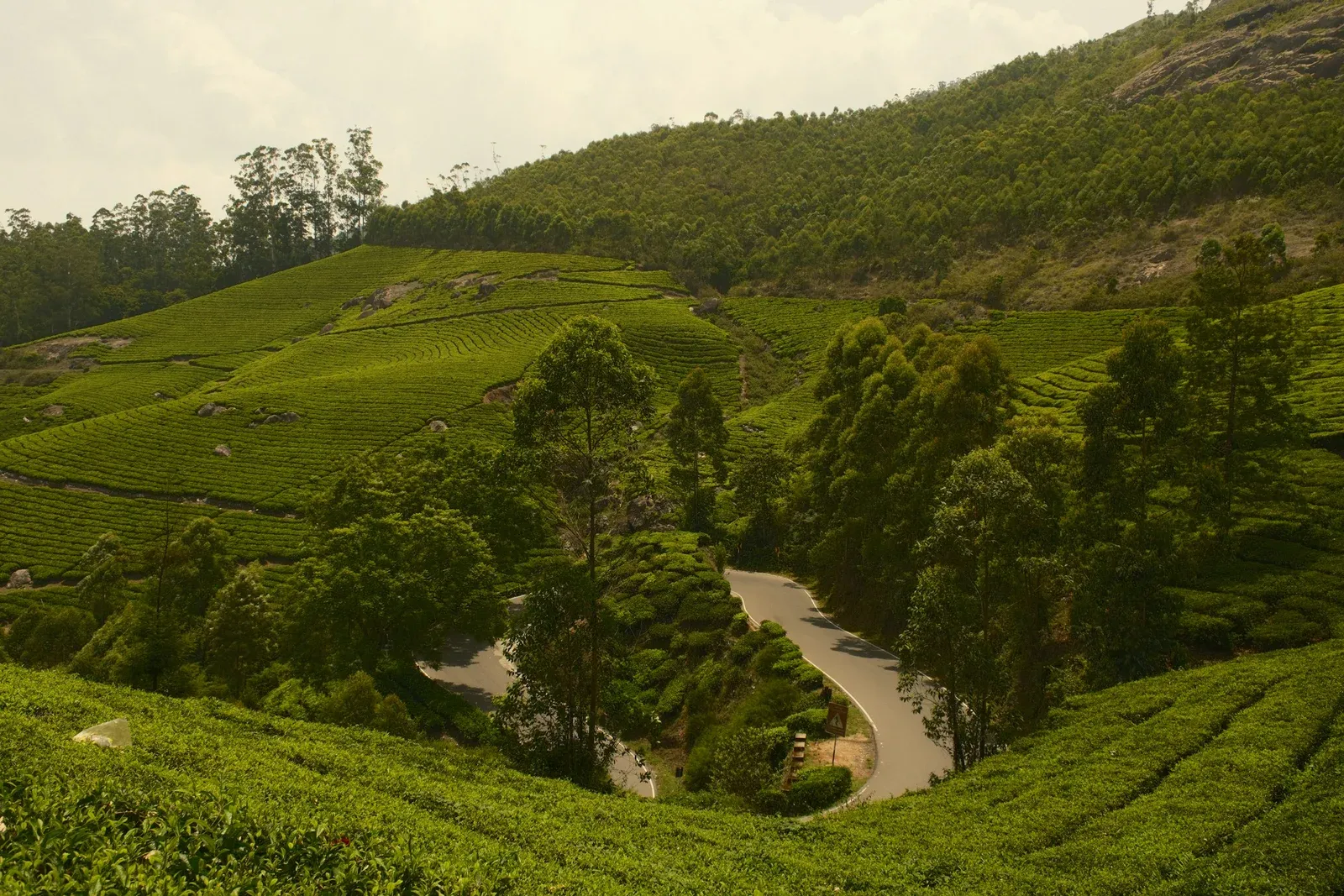
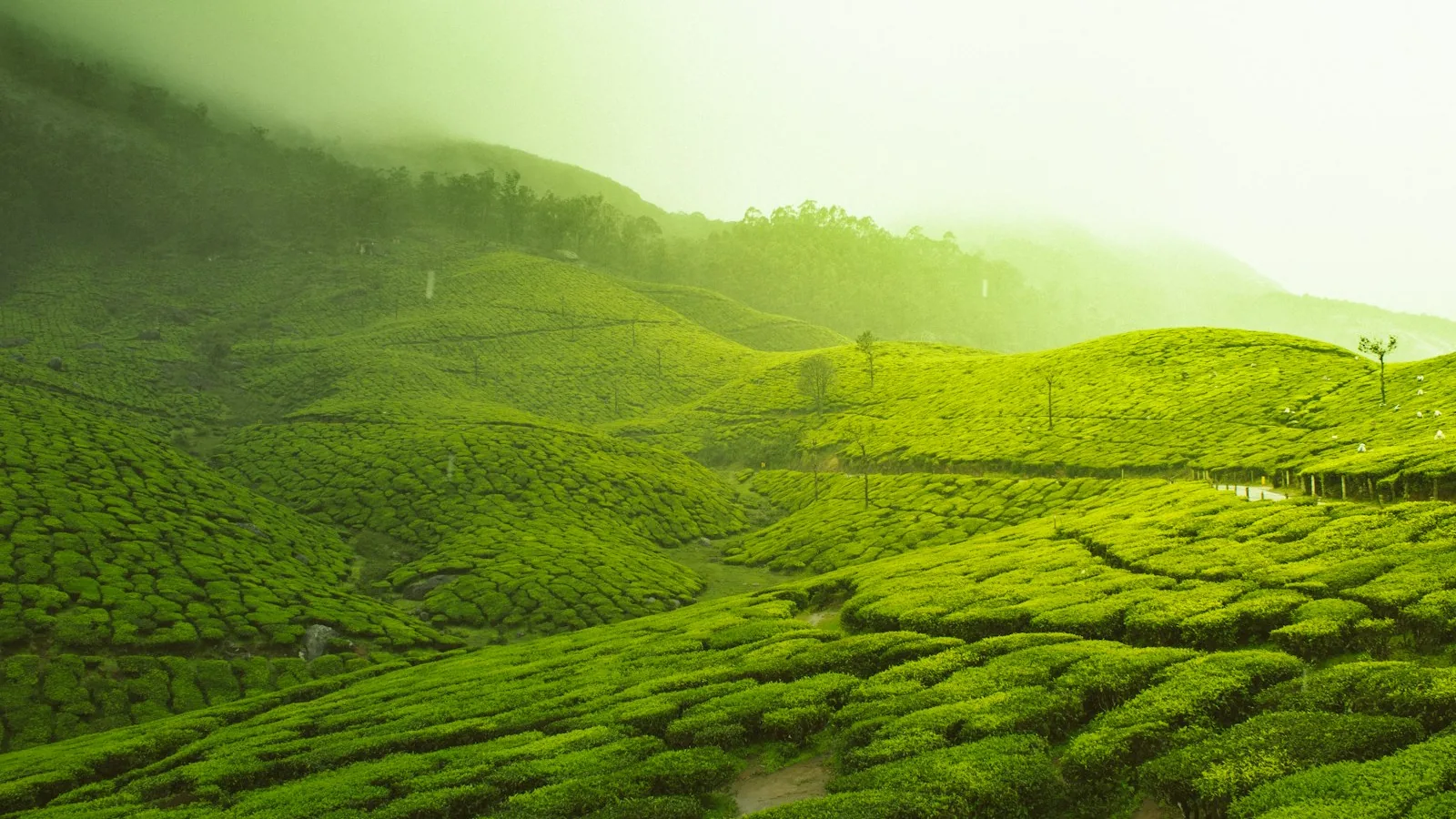
The bus climbs about 4 km through tea estates and then grassland, and the ride takes 10 to 25 minutes. Sometimes the driver stops to let a tahr cross the road.
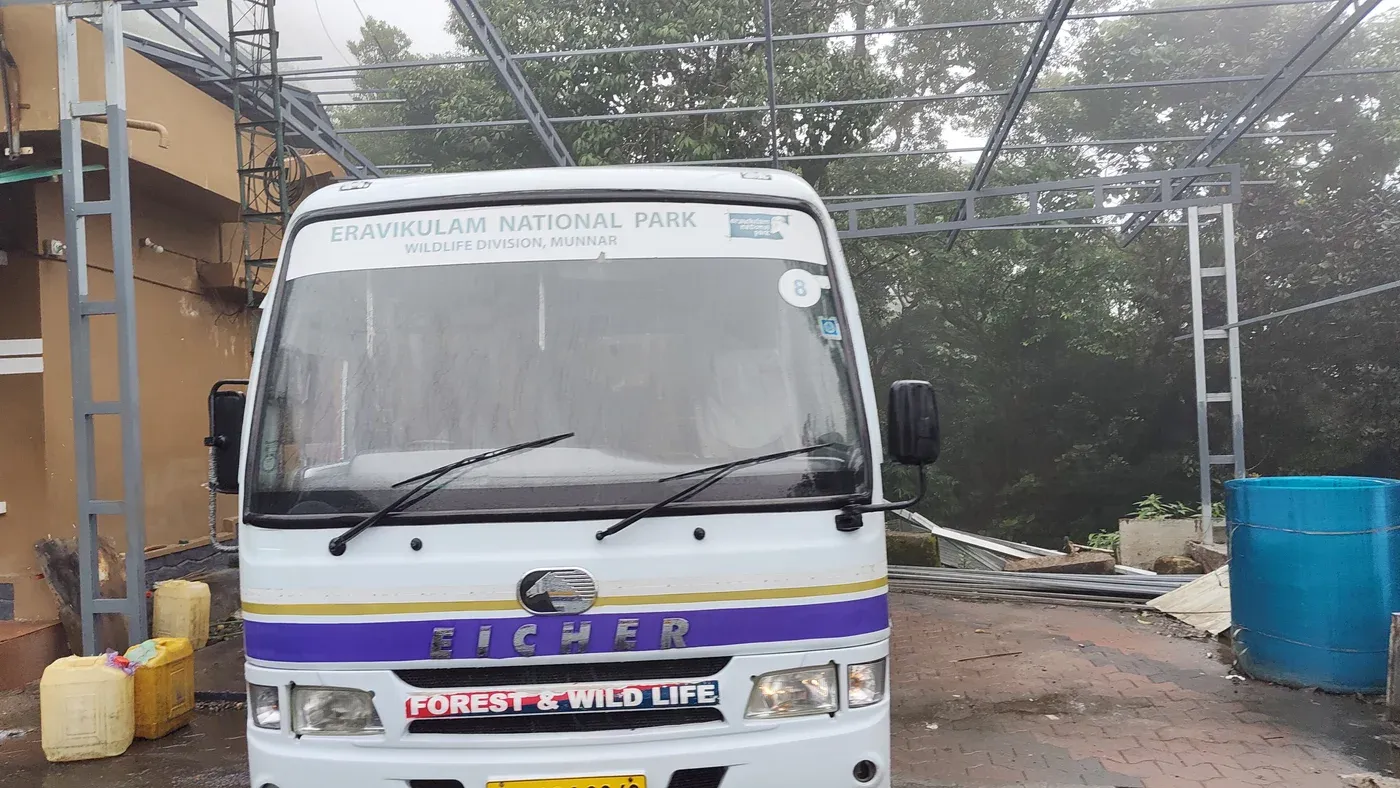
The park's bus takes every visitor up from the Fifth Mile entrance; private cars stop there.
Photo: Ranjithsiji, CC BY-SA 4.0, Wikimedia Commons
You cannot take food, drinks or plastic into the park, and staff check every bag at Fifth Mile. So eat and use the toilets at Fifth Mile before the bus: the cafeteria, toilets and a first-aid room are at the entrance. Before you queue, ask at the entrance about water in a steel bottle or food for a baby. The parking ground holds around 300 vehicles, and on holidays it fills by mid-morning, so come by auto or taxi on those days and get dropped at the entrance.
Wheelchair users can board the park bus at Fifth Mile and then ride a buggy at the top, free for visitors with a disability. So they see the tahr and the view without the walk. The entrance also has ramps and adapted toilets. Elderly visitors who cannot stand in a long queue do best on a weekday at 8 am.
Eravikulam National Park to Munnar distance and drive time
Eravikulam's Fifth Mile entrance is 9.6 km from Munnar town by road, a drive of 25 minutes with no traffic. The times from the other stay areas are in the table near the top.
Without a car, an auto (auto-rickshaw) or a taxi from Munnar town is the easy way. Autos in Kerala charge ₹30 for the first 1.5 km, ₹15 for each km after that, and ₹10 for every 15 minutes of waiting. Agree on the total before you leave.
A taxi for a full day around Munnar costs around ₹3,200 to ₹3,500. Buses from Munnar towards Marayoor and Udumalpet pass the entrance; tell the conductor you want to get off at Rajamala. Parking is at Fifth Mile.
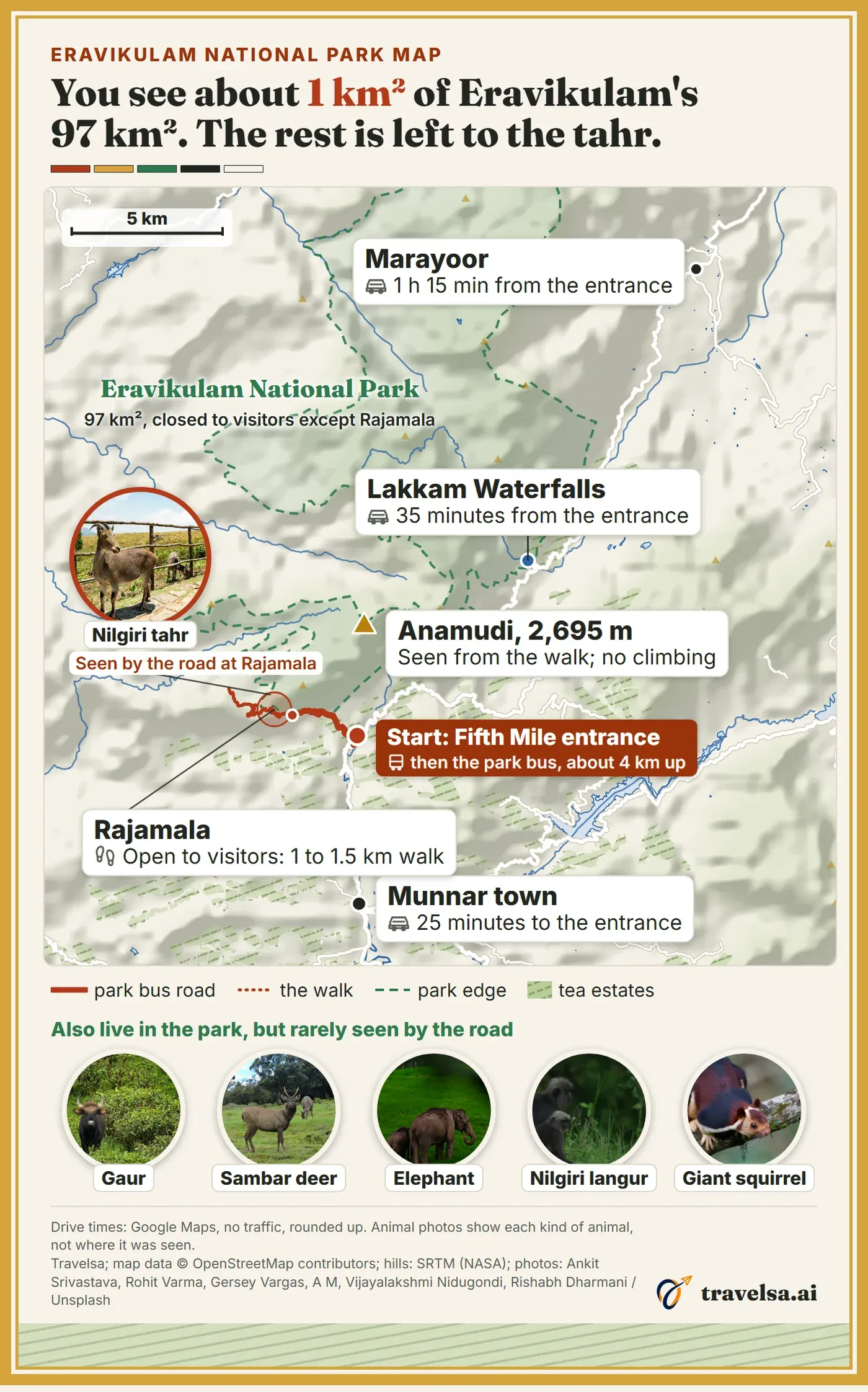
Rajamala, at the end of the park bus road, is the only part of Eravikulam open to visitors. Tap to enlarge.
Travelsa; photos: Ankit Srivastava, Rohit Varma, Gersey Vargas, Rishabh Dharmani, A M, Vijayalakshmi Nidugondi / Unsplash; map data © OpenStreetMap contributors
Rajamala walk, stop by stop
From the bus stop, you walk a paved road of 1 to 1.5 km through open grassland and turn back where the road open to visitors ends. The road climbs gently all the way, and you walk at your own pace.
- The bus stop. You get off the bus high on the plateau. On a winter morning the wind is cold, so put your jacket on here.
- The stone park sign and the boards. Near the start, boards tell the story of the Nilgiri tahr and of the kurinji flower. Read them on the way up, while the crowd from your bus moves ahead.
- The tahr beside the road. Tahr usually graze on the slopes on either side, and some come within a few steps of the road. On a misty morning they can be hard to see, so walk on slowly and wait a few minutes. A sharp, thin whistle means a tahr is uneasy: step back and let the herd settle.
- Birds in the grass. In the grass you may see the Nilgiri pipit, a small brown bird found only in these hills, and laughingthrushes where the shola forest meets the grass.
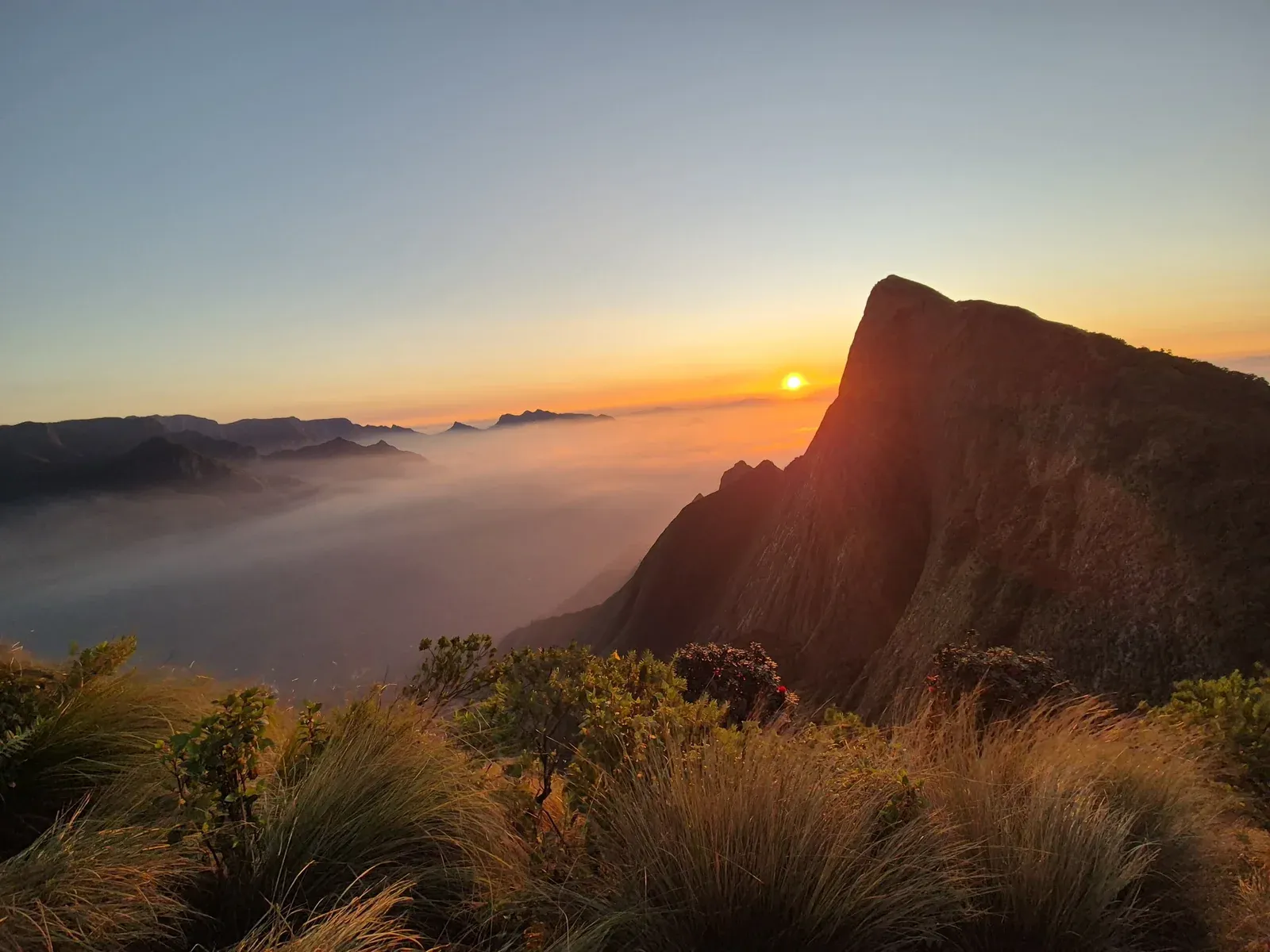
- The Anamudi view. On a clear morning, you can see Anamudi from this part of the road.
- The turn-back point. The part of the road open to visitors ends here. Everything past it, about 99% of the park, is left to the tahr.
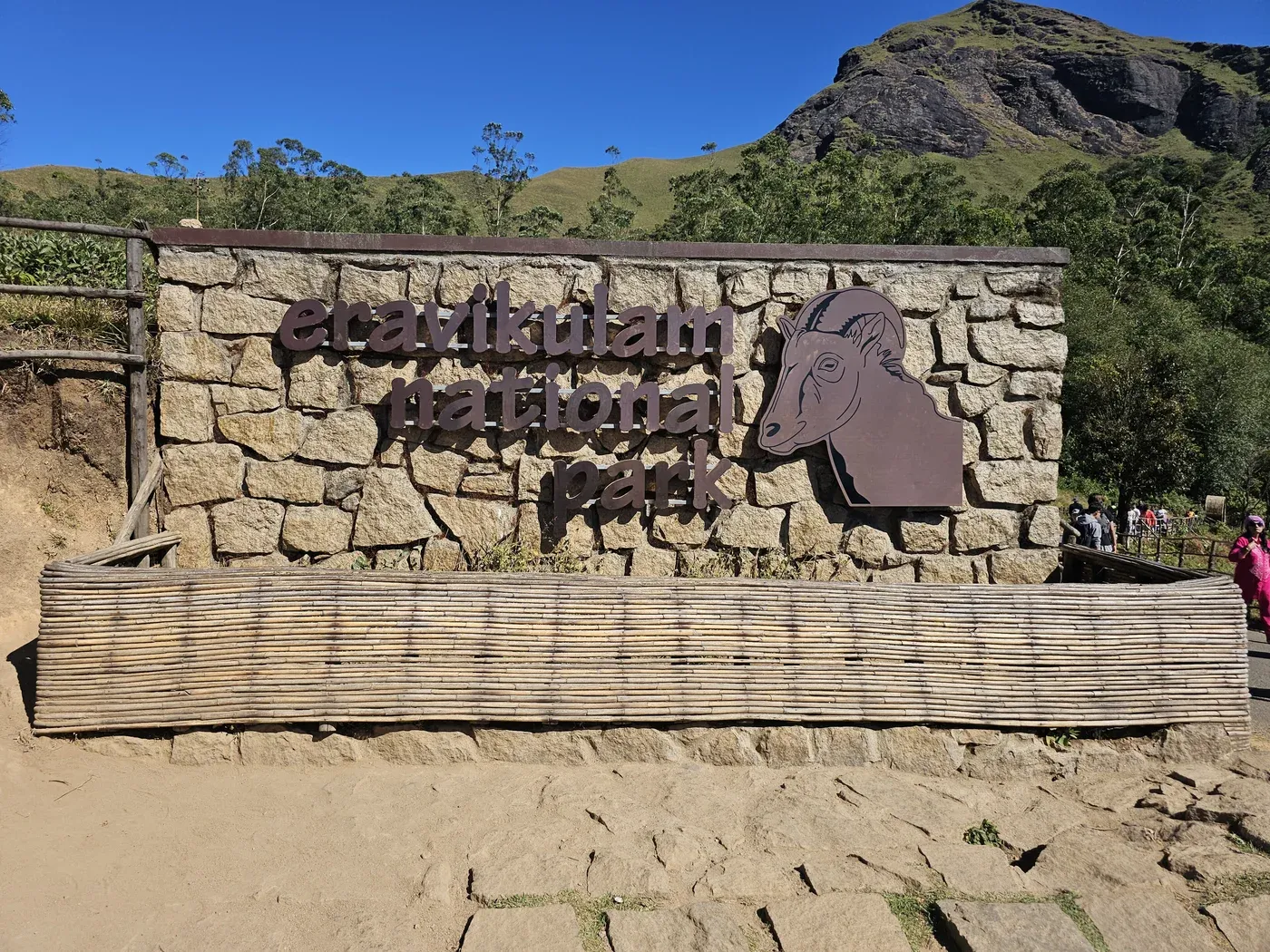
The walk at Rajamala starts beside this sign, with the grassland and the rock peak behind it.
Photo: Gannu03, CC BY-SA 4.0, Wikimedia Commons
The park has also added a medicinal garden of around 200 plants, a rainbow bridge and photo points.
"The driver was patient and waited for the mountain goats to move to the side." (A traveller on the Rajamala bus)
The walk suits nearly everyone, and children love spotting the tahr. On a cold, windy morning it feels harder, and people with a heart problem may find the slope tiring. Not for you if you want a real trek: the road is paved, and walking off it into the grass is against the park rules.
Nilgiri tahr, the Western Ghats goat Eravikulam protects
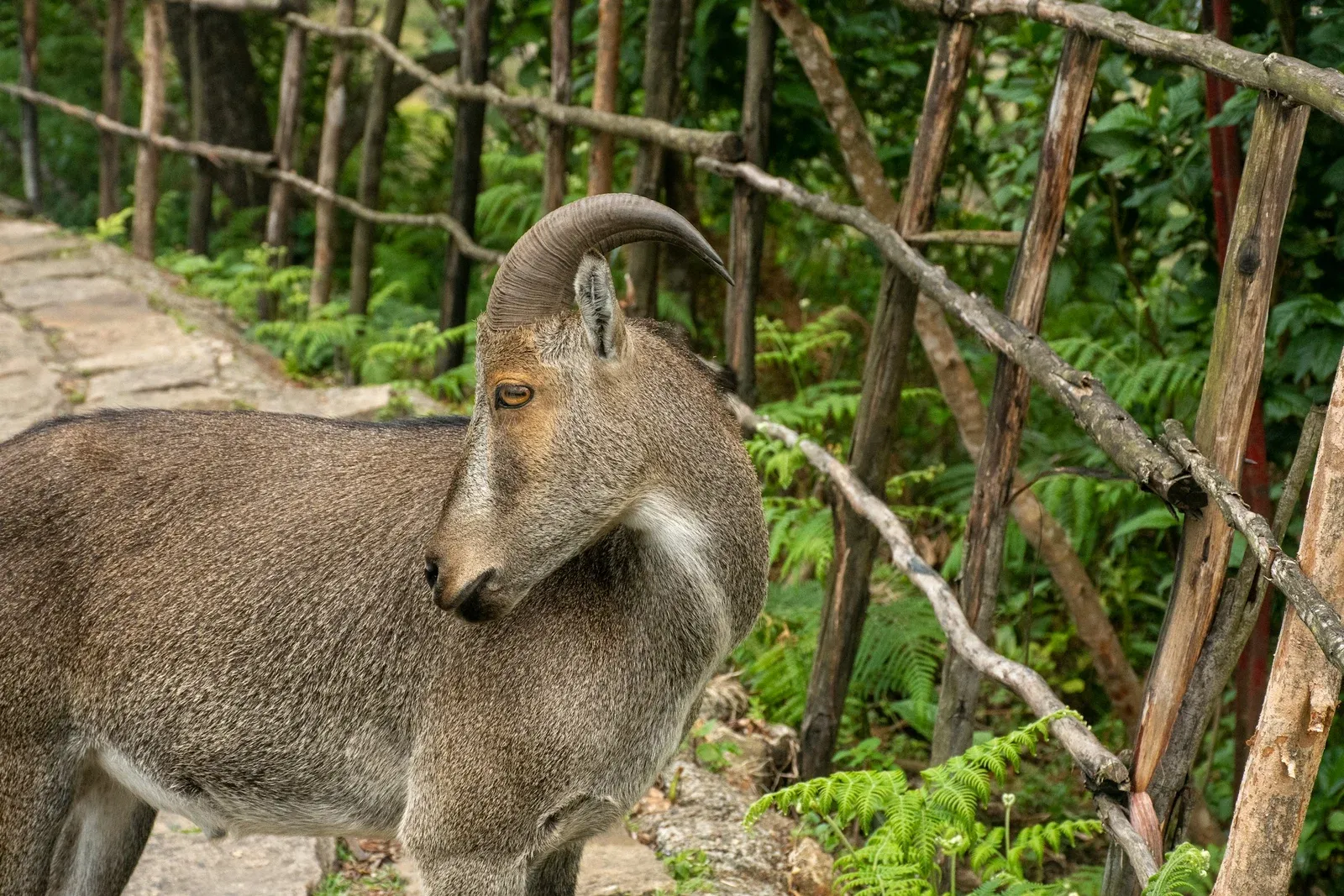
Eravikulam National Park is famous for the Nilgiri tahr, a wild mountain goat found only in the southern Western Ghats, and it holds the largest population of them. Locals call it varayaadu, which means cliff goat or hill goat. In 1970, around 500 tahr lived here; the 2025 count found more than 800. Each April count also finds well over 100 young born that winter.
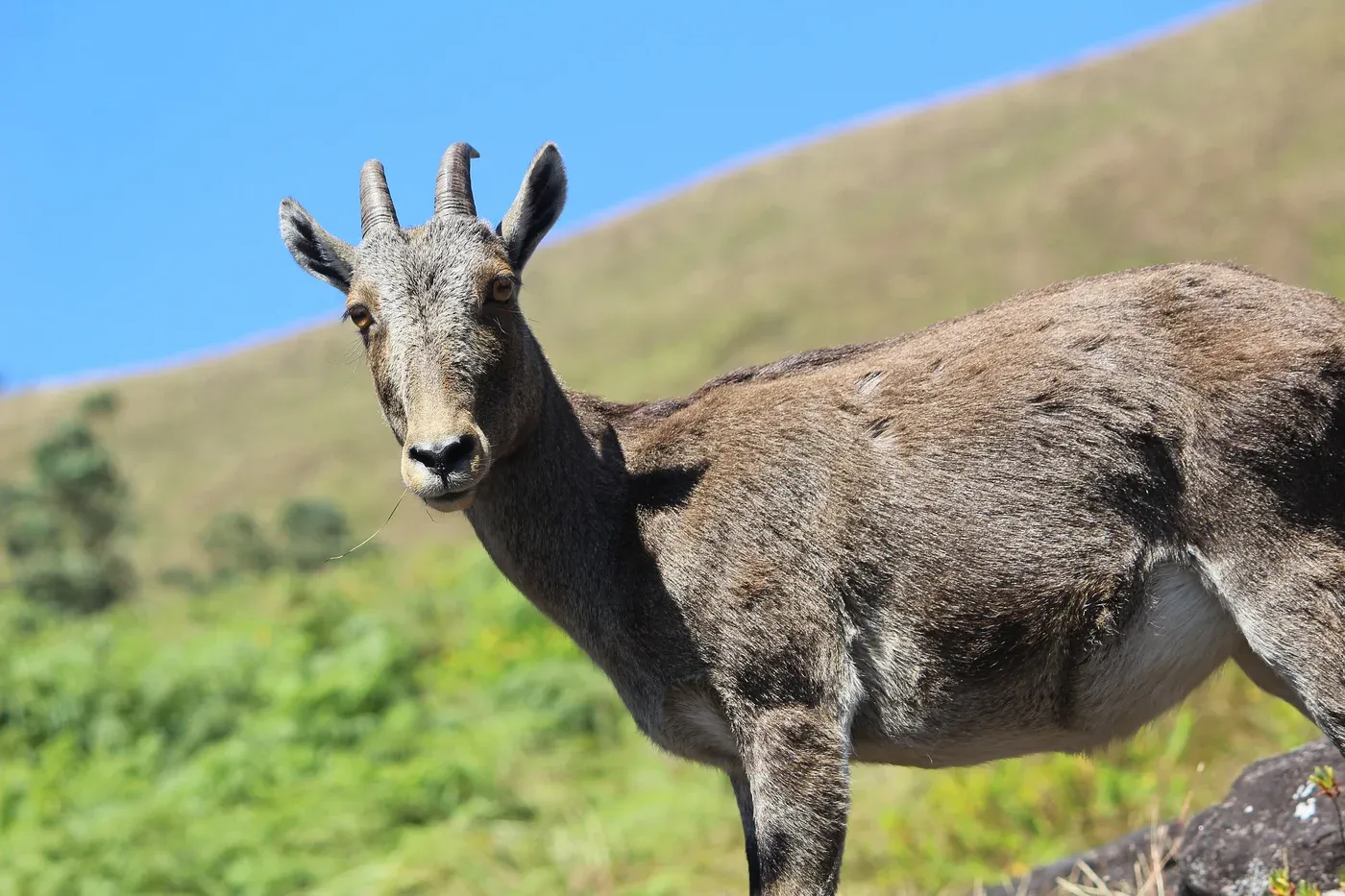
A Nilgiri tahr on the grassland at Rajamala.
Photo: Sivahari, CC BY-SA 4.0, Wikimedia Commons
- Females and young are grey, with dark patches on the knees. They make up most of the herds you'll see.
- A grown male is much darker, chocolate brown, with a pale silver "saddle" on his back. People call him a saddleback.
- Mixed herds can reach 150 animals. Near the road you'll see a few at a time.
The tahr at Rajamala often walk within 2 metres of people. Elsewhere in the park, they move off when people are still more than 100 metres away. They've been this calm for a long time: in 1970, a wildlife writer said that seeing tahr at Rajamala was "more or less certain". They're still wild animals, so stay on the road, let them come to you, and never touch or feed them.
The park rules ban music and loud talk, and smoking and alcohol too. The tahr's alarm whistle can carry a kilometre, so a loud group sends the whole herd up the slope.
Anamudi Peak and the Anamudi hills
Anamudi Peak's height from sea level is 2,695 m, the highest point in south India. It rises from the Anamudi hills (also spelt Anaimudi) inside Eravikulam National Park, and you see it from the walk at Rajamala on a clear morning.
Nobody climbs Anamudi on a visit. The peak is in the closed core of the park, and visitors may go only on the road at Rajamala. A guide who offers you an Anamudi summit trek is offering something the park does not allow.
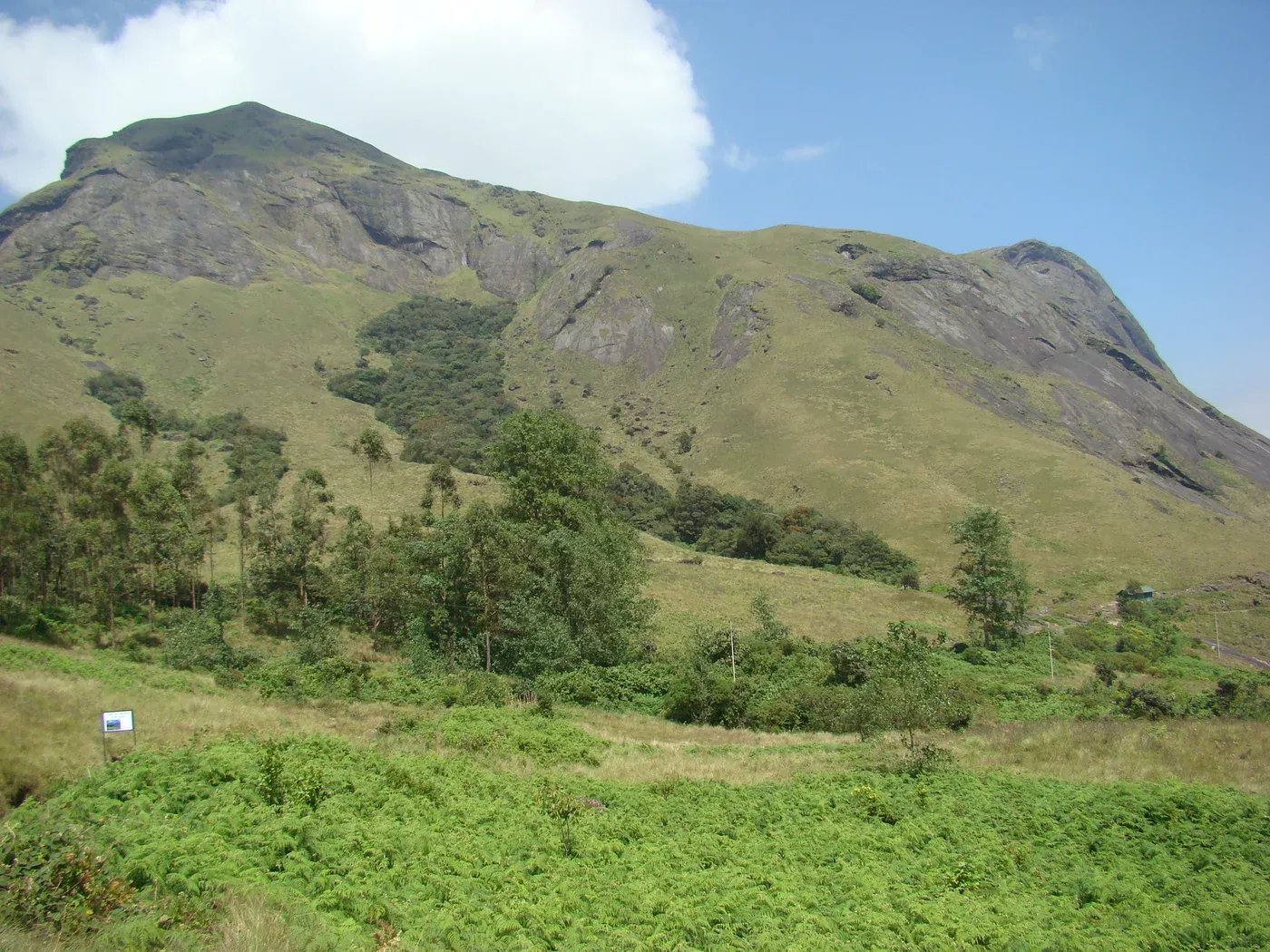
Anamudi, seen from the road at Rajamala. The peak itself is closed to climbers.
Photo: Jiths, CC BY 2.0, Wikimedia Commons
A planter who climbed Anamudi in the 1870s found a small flat top with a spring near the summit. He counted a herd of 70 tahr up there.
Neelakurinji at Eravikulam
Neelakurinji (blue kurinji) flowers only once in 12 years. In a bloom year, the flowers come out from August to October, and different hills flower in different years. Inside the park, the last mass bloom was in 2018 and the next is expected in 2030. Hills outside the park, such as Chokramudi, flowered in 2026, so flowers on those hills do not mean the park is in bloom.
Between blooms, the park's kurinji garden grows 20 kinds of these shrubs.
Tamil poets wrote about kurinji hills almost 2,000 years ago. In one short poem from the Kuruntokai, an old collection of Tamil love poems (poem 3, by Tevakulattar), a woman says her love is bigger than the earth, higher than the sky and deeper than the sea. Her love is for a man from the hills where bees make rich honey from kurinji flowers on dark stems.
How Eravikulam became a national park
Before it was a park, Eravikulam was a hunting reserve of the Kannan Devan Hills Produce Company, the tea company that owned these hills. From 1928, the High Range Game Preservation Association looked after it, with Muthuvan men from the hills as its game watchers. The Forest Department still calls the high grassland in the middle of the park the Hamilton Plateau, after Colonel Douglas Hamilton, who wrote about these hills in the mid-1800s.
The state took the land back in 1971. In the early 1970s, Kerala was short of rice, and a Kerala minister went to Delhi to ask for 40 railway wagons of it. The central food minister offered 25, then asked about a park for the tahr. They settled on 36 wagons, and the sanctuary, named Eravikulam–Rajamallay, followed in 1975. Kerala's first national park followed in 1978.
The name Eravikulam joins two Tamil words: stream (aruvi) and pool (kulam). Rainbow trout swim in those streams; the planters brought them from Scotland.
Look down from the road and you'll see two kinds of land: grass on the slopes, and patches of evergreen forest (shola) in the valleys. Grass covers 60% of the park's 97 km², and shola about a quarter.
Muthuvan families came up from the Madurai side centuries ago, and at home they still speak a dialect of Tamil, not Malayalam. They say their name comes from muthuku, the back, because their ancestors carried the goddess Meenakshi of Madurai on their backs when they came to these hills. Lakkomkudy, beside Lakkam Waterfalls, is their village inside the park. Muthuvan men work in the park as watchers today, and Muthuvan trackers help with the tahr count each April.
Lakkam Waterfalls, Marayoor and the rest of the road
Lakkam Waterfalls (also written Lakkom) is the stop to add after Eravikulam. It's 17 km further up the same road, a drive of 35 minutes with no traffic from the Fifth Mile entrance. The village committee of Lakkomkudy runs it for the Forest Department, with bathrooms, lockers, tea and snacks, and a small entry fee. Its water flows into the Pambar river and on to the Cauvery in Tamil Nadu.
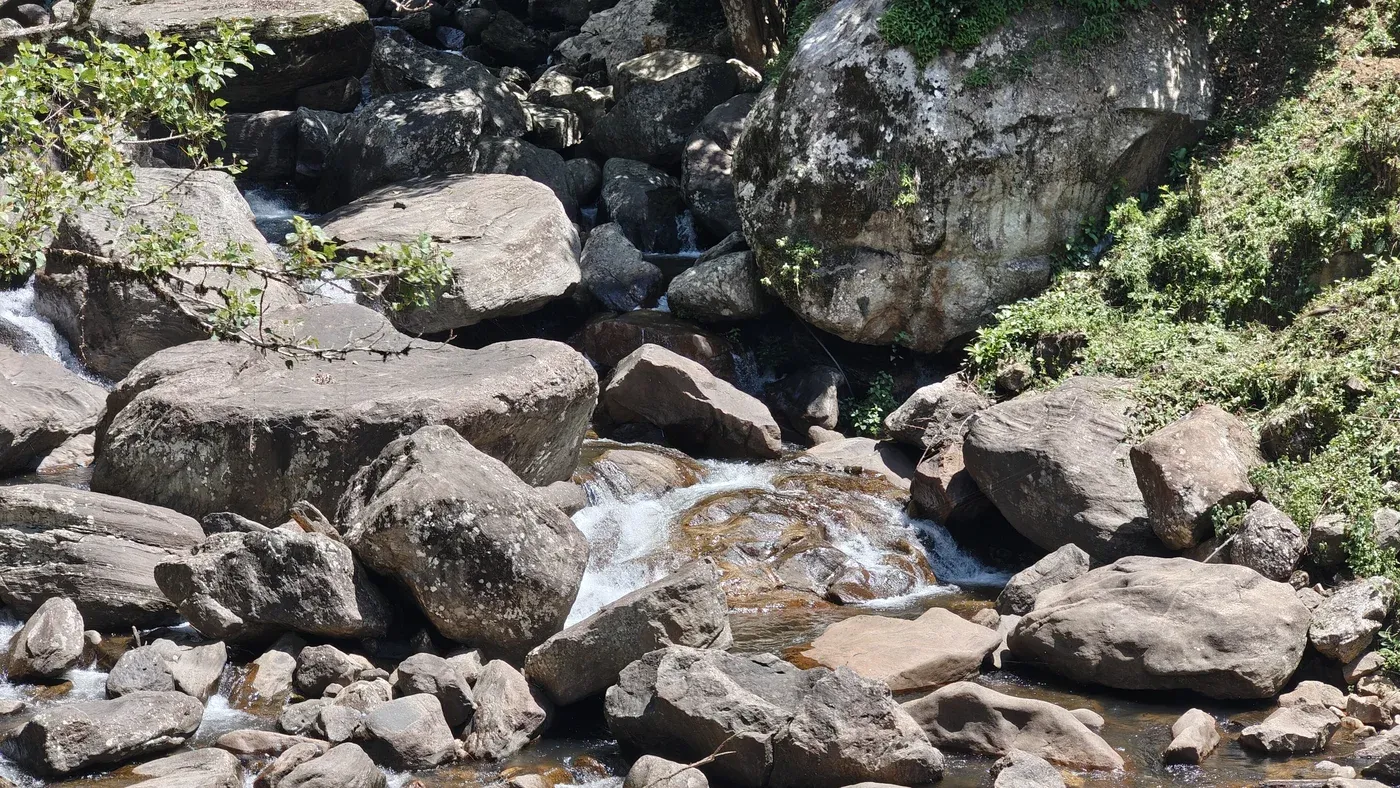
Lakkam Waterfalls, further up the same road, is the stop to add after the park.
Photo: Ranjithsiji, CC BY 4.0, Wikimedia Commons
Nyayamakad Waterfalls is on the same road, right by the entrance, and you see it from the roadside.
Marayoor town is 1 h 15 min from the entrance. The Forest Department runs a sandalwood depot there, where you can see sandalwood being processed. Marayoor jaggery (sharkara), a dark cane sugar with its own GI tag, is sold in the town. The muniyara, burial chambers about 2,000 years old made of granite slabs, are on the slopes nearby.
A weekday plan for the whole road, with times from our drive table:
- 8 am: the first bus up at Fifth Mile.
- About 11:30 am: back at your car.
- About 12:15 pm: Lakkam Waterfalls.
- Afternoon: lunch and the sandalwood depot in Marayoor.
- 4:30 pm: leave Marayoor. Munnar town is 1 h 30 min away, so you're back before dark.
The Forest Department's boards on this road warn of fog and elephants, so drive it in daylight. On Sundays and holidays the park takes longer, so keep Lakkam and leave Marayoor for another day.
The forest office in Munnar also runs a 3-hour Kurinji Trail walk, for around ₹290 an Indian visitor and ₹560 a foreign visitor (two at least), and a 1-hour Cascade Walk beside Lakkam falls, for around ₹100. Both run in the morning and evening, and the office also rents a log house at Lakkam for around ₹3,000 for two. Before you plan on any of them, call the Wildlife Warden's office and ask whether it's running this season.
Call: Wildlife Warden's office, Munnar: 04865 231587
Like this day? Turn it into your own Munnar plan, with the drive time between each stop.
Who Eravikulam suits, and who can skip it
Eravikulam suits almost everyone on a first trip to Munnar. You see a rare animal up close without a safari or a trek, on a paved road. Families with children and older parents do well here in the 8 am slot.
Skip it if you can come only on a Sunday in May and hate queues: the bus queue alone can take 2 hours. On a weekday morning, the queues move fast. In February and March the park is shut, so go to Kolukkumalai or Top Station that morning instead.
Eravikulam and Periyar are different trips. At Eravikulam you walk a short road in high grassland to see tahr. At Periyar, in Thekkady, you go out by boat or on a guided trek through a tiger reserve.
Travelling with family? Plan a Munnar trip for the whole family.
More Munnar guides
Common questions
In which district is Eravikulam National Park?
Is Eravikulam National Park open now?
How far is Eravikulam National Park from Munnar?
What is the entry fee for Eravikulam National Park?
How do I book Eravikulam National Park tickets online?
How much time is needed for Eravikulam National Park?
What is the best time to visit Eravikulam National Park?
Can you climb Anamudi Peak?
Sources
- Eravikulam National Park booking site (Anamudi Forest Development Agency, Kerala Forest Department): fees, entry time, ID and rules — ticket prices, the 8 am opening, the Munnar counter fee, what you can carry
- Eravikulam National Park booking site: refund policy — the cancellation rules
- Eravikulam National Park booking site: contact page — the park office phone numbers, including 85476 03222
- Munnar Wildlife Division, Kerala Forest Department: Eravikulam National Park — the park's size and its Nilgiri tahr
- Munnar Wildlife Division, Kerala Forest Department: home page — the division's link to the booking site
- Munnar Wildlife Division: news and closure notices — the 1 February to 31 March calving closure
- Kerala Forests and Wildlife Department: Fourth Management Plan of Eravikulam National Park, 2022 to 2032 — the bus from Fifth Mile, the walk, the facilities at the entrance, the park's history
- Kerala Tourism: history of Eravikulam National Park — the game reserve, the sanctuary and the national park
- Kerala Tourism: Anamudi Peak — the height of Anamudi
- Kerala Tourism: Eravikulam National Park — the last and next Neelakurinji bloom
- Kerala Tourism: Eravikulam ecotourism programmes — the Kurinji Trail, the Cascade Walk and Lakkam Waterfalls
- Eravikulam National Park booking site: international ticket form — the three time slots and the bus included in the ticket
- Incredible India (Ministry of Tourism): Eravikulam National Park — the Rajamala tourism zone and the 2 to 3 hours a walk takes
- Weather data by Open-Meteo.com (CC BY 4.0) — hourly weather at Rajamala, 2016 to 2025
Dreaming of Munnar?
Let Travelsa build your perfect Munnar itinerary in minutes.